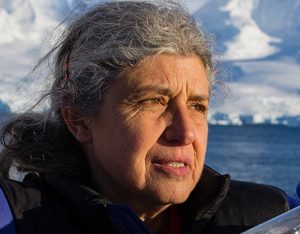
 Dr. Maria Vernet (Lead Principal Investigator)
Dr. Maria Vernet is the Lead-Principal Investigator for FjordPhyto and a Senior Research Biologist at Scripps Institution of Oceanography. Vernet has conducted research in international settings since 1987 when she first traveled to the Arctic and in 1988 to Antarctica. She participated in one of the first research teams to study the effect of ultraviolet radiation on marine phytoplankton after the discovery of the Antarctic ozone hole in 1985. She has also participated in research studying free-floating icebergs and the ecosystems of the Larsen B Ice Shelf. Maria was recently awarded the prestigious AAAS Accomplished Scientist Fellow in Biological Sciences from the American Association for the Advancement of Science in 2018.
Her field expeditions have taken her into the Atlantic, Pacific, Arctic and Southern Oceans with a variety of internationally assembled research teams. As a sea going oceanographer, Maria has spent enough time in Antarctica over the decades that she has lost count. Her first encounter with the Expedition Cruise Industry occurred in 2015 where an initial collaboration idea was sparked (see the About tab under History). In 2016 the FjordPhyto program became a reality. Maria has been recognized as one of the outstanding women scientists who have broadened the knowledge on biological photoreceptors.
To learn more about Dr. Vernet, watch this Scientist’s Life in 99 Seconds. Maria received her Ph.D. (1983) and M.S. (1981) in Biological Oceanography from the University of Washington and her B.S. (1975) in Biological Sciences from the University of Buenos Aires, Argentina. Link to Maria’s CV and the Vernet Lab website.
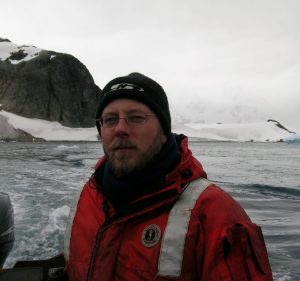
Dr. Rick Reynolds (Co Principal Investigator)
Dr. Rick Reynolds joined the FjordPhyto team as the Co-Principal Investigator in 2020 and is a Project Scientist at the Scripps Institution of Oceanography, UC San Diego. Rick develops and uses optical tools, including satellite measurements of ocean color to study ocean ecology and biogeochemistry. He has extensive experience working in both polar regions. Rick received his Ph.D. from the University of Southern California (1996) and his B.S. from Bowling Green State University (1986). He serves on several NASA working groups and international science teams.
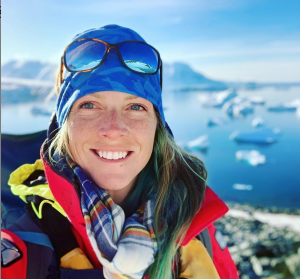 Dr. Allison Cusick (Biologist and Oceanographer, Co-Founder FjordPhyto)
Dr. Allison Cusick is FjordPhyto’s official second Doctor! She completed her degree in the Biological Oceanography PhD program at Scripps Institution of Oceanography and the Co-Founder of FjordPhyto established in 2016-2017.
Her first expedition to Antarctica occurred in 2013 where she lived aboard the U.S. Antarctic Programs’ icebreaker Nathaniel B. Palmer for 53-days tracing the fate of algal carbon export in the Ross Sea. The same day she boarded the Palmer icebreaker for the two-month expedition at sea, she ran a marathon on the Ross Ice Shelf, dressed as a banana. Every year since 2017 (except the pandemic 2020-2021) she has traveled to the Antarctic Peninsula on various tour ships running FjordPhyto as Lecturer & Scientist. She has spent more than 300 days at sea in Antarctica.
She published her first first-author paper on FjordPhyto in Oceanography magazine, and in ECO Magazine here she was also featured as a Polar Hero and in Condé Nast Traveler. Allison had a brush with celebrityhood starring in Jeff Goldblum’s show ‘The World According to Jeff Goldblum’ sharing the science of tiny marine organisms and the world of phytoplankton in the “Tiny Things” episode streaming on Disney+ Plus. For her work progressing the efforts of FjordPhyto, Allison was recognized by the Inaugural UCSD Chancellors Student Innovation Award.
Prior to graduate school, Allison’s diverse and varied scientific career has taken her around the globe. She studied the effects of urbanization and forest fires on the distribution patterns of songbirds and squirrels in the Cascade Mountains of Washington. She worked on conservation efforts in Mexico studying the breeding behaviors of parrots and climbed into the jungle canopy studying macaws in the Peruvian Amazon. She has led undergraduate students on big cat identification field trips to South Africa and tracked packs of wild dogs in Zimbabwe. Allison is also a certified Polar Tourism Guide, and a certified PADI/NAUI Rescue Diver and AAUS Scientific Diver.
Allison is an advocate for connecting people to the wonders of science through her social media platform Woman Scientist to pursue people to pursue careers in adventurous field science . To learn more about Allison’s career visit her LinkedIn or see Allison’s CV.
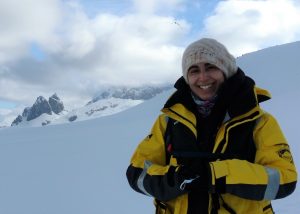 Dr. Martina Mascioni (Phytoplankton Ecologist)
Dr. Martina Mascioni is FjordPhyto’s FIRST official Doctor! She is a collaborating post-doctoral researcher from Argentina working at División Ficología in the Facultad de Ciencias Naturales y Museo at the Universidad Nacional de La Plata (Buenos Aires, Argentina). Her PhD thesis work used samples from the FjordEco (the mother program to FjordPhyto) and FjordPhyto projects focusing on the ecology and diversity of the phytoplankton community from the coastal areas of the western Antarctic Peninsula.
Martina was born in Ushuaia (Argentina), one of the cities that most travelers visit before or after their trip to Antarctica. She has also lived in San Luis (Argentina) and currently resides in La Plata, where she moved to pursue a scientific career as a Biologist. In her free time, she plays field hockey and loves outdoor activities, like biking and hiking in San Luis mountains. She speaks Spanish, English, and some Italian.
She has expertise in Antarctic phytoplankton ecology and diatom taxonomy and is a teacher’s assistant in a subject called “Systematic Botany I” (Botánica Sistemática I) a subject taken by third-year biology students learning about protist and fungi biology.
In 2019, Martina was awarded with IAATO-CONMAP and SCAR fellowships to travel to the USA and collaborate with Allison Cusick and Maria Vernet from Vernet Lab at Scripps Oceanography. Due to the covid-19 pandemic this opportunity was finally realized in the summer of 2022.
Martina is passionate about her work with microalgae and she hopes to keep working on polar phytoplankton for many more years to come. Check out our publications list to see results from her work.
To learn more about Martina’s Career visit her profile on ResearchGate, see FjordPhyto en Español or download her CV here.
Christian Johnson (Marine Biologist/Geneticist, PhD Graduate Student)
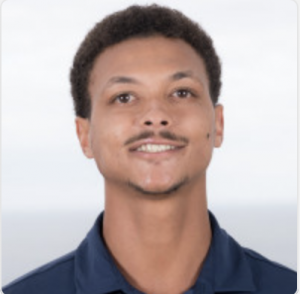
Christian Johnson became involved in the FjordPhyto project through the Scripps Institution of Oceanography’s Summer Undergraduate Research Fellowship (SURF) Research Experiences for Undergraduates (REU) program in 2021 and gained skills analyzing next generation sequencing data, as well as phytoplankton diversity data in relation to environmental stressors. His passion for environmental related research drove him to seek experiences working in the field and the lab of Dr. Andrew Allen at J. Craig Venter Institute. Through financial support from Viking, Christian started his PhD graduate work with the FjordPhyto team and Dr Vernet and Allen at Scripps Institution of Oceanography and J. Craig Venter Institute in September 2023. His work is setting the foundation to transform COVID-19 PCR labs on board Viking Expedition vessels, into a Genomics At Sea Program (GASP) and leads the way with genetically sequencing phytoplankton at sea using Oxford Nanopore technology. He earned his Bachelor’s degree from the University of California San Diego in Earth and Ocean Sciences. He became He has experiences studying ecosystems and geology of the national parks within California, as well as biodiversity and coral reef ecosystems in Puerto Rico. Christian has been to sea on research vessels for the CalCOFI monitoring program as well as expedition cruise vessels to Antarctica and Chile aboard Viking expedition M/V Viking Polaris, M/V Viking Octantis. With his entrepreneurial spirit he co-founded Wilder Blue Planet helping people to be stylish while saving the planet!
Eleanor Grudin (Training and Education Coordinator) 
Tobías Chavero (Biologist, graduate student) 
Tobías Chavero finished his Bachelor’s degree in Biology with a specialty in Botany at the Universidad Nacional de La Plata, Argentina and has recently been awarded a graduate student position in the PhD program.
He has always been interested in topics such as conservation, biodiversity, climate change and Antarctica. In his free time, when he is not playing soccer, he likes to play guitar or make music with friends. He is also a photography enthusiast and would love to one day be able to take photos in Antarctica.
After watching a presentation about FjordPhyto, he became interested and contacted Martina to start getting involved and learn more about citizen science, phytoplankton and everything covered by the project. Tobias will be analyzing the microscopy samples from FjordPhyto.
Delfina De Nicolo (Biologist, Social Media Content Creator) 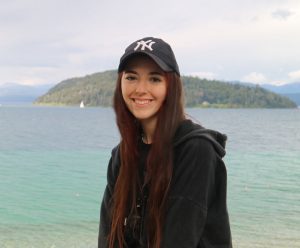
Delfina De Nicolo is from Buenos Aires, Argentina. She is a student of Bachelor’s degree in Biology with a specialty in Botany at the Universidad Nacional de La Plata, Argentina.
She is very interested in being part of projects that promote the conservation and protection of the environment, with special focus on biodiversity, marine ecosystems and environmental impact in Antarctica. She also works in editing and content creation for social networks integrating design and communication for conservation through an interdisciplinary way.
She got to know FjordPhyto through other members of the team, and contacted Martina to be part of it, as she was very enthusiastic about the goals project.
Lorenzo Kohler (Biologist, Undergraduate Student)
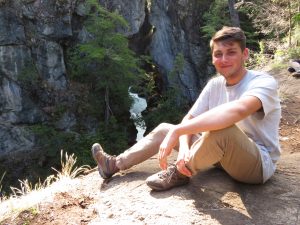
Lorenzo Kohler grew up in Berazategui, Buenos Aires, where he has worked with his family as a gardener, developing a passion for nature from a young age. He is currently an undergraduate student pursuing his Bachelor’s degree in Biology with a specialty in Botany at the Universidad Nacional de La Plata, Argentina.
In the university, he became involved in various student groups and organizations working to make higher education more accessible to all and seeking new ways to share knowledge with the world. He currently represents students on his faculty’s decision-making committee.
While taking the “Systematic Botany I” (Botánica Sistemática I) class he met Martina Mascioni and became interested in her research. In September 2021 he started a 6-month internship on the FjordPhyto project. He has designed an interactive virtual map for the FjordPhyto sampling sites and continues to learn about phytoplankton diversity and ecology.
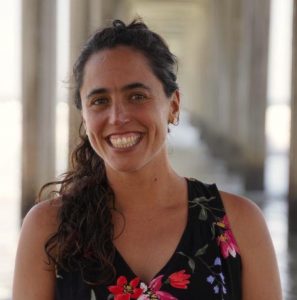 Celeste Kroeger Campodónico (Marine Biologist, Educator, and Artist, M.A.S.)
Celeste grew up on the coast of central Chile, a country which more than 4,000 kilometers of linear coastline, and studied marine biology at the University of Valparaíso. She recently came to the United States to complete a Masters program in Marine Biodiversity and Conservation from Scripps Institution of Oceanography, UC San Diego (USA). The time went by fast and she is now living back in Chile.
As a scientist in a family of artists, she feels in her heart and brain that education, outreach, citizen science, and research share space. She has participated in projects concerning all of these areas, with NGOs and universities, always committed to finding new ways to socialize scientific knowledge and to awaken interest in socio-environmental issues.
In the same vein, together with four young women, Celeste created a foundation for marine education called “Expedición Batiscafo,” and in 2020 she co-founded the Latin-American Marine Educators Network (RELATO).
She is currently working on a visual phytoplankton identification book, highlighting the taxa commonly found in the FjordPhyto citizen science collected samples from the Western Antarctic Peninsula, designed for non-scientific audiences. This book is illustrated in collaboration with artist Ingrid Cespedes in Chile. We hope to share this book with you soon!

Elena Neibaur (Marine Conservationist, M.A.S.)
Elena Neibaur is a dynamic scientist with a passion for marine conservation and environmental justice. With a B.A. in Environmental Science and Policy and an interdisciplinary M.S. in Environmental Studies, Elena has dedicated her career to promoting sustainability and educating the public. As a former Peace Corps volunteer in Mexico, Elena has a proven track record of securing funding for water projects in rural communities. She also served as a community outreach specialist for the Environmental Protection Agency where she translated complex scientific information into language accessible to the public. Her commitment to ocean conservation and environmental justice is evident in her work with the nonprofit Mariposas. Under Mariposas, she initiated the annual Environmental Service Adventures program, where she guides and inspires a new cohort of young women from Central Mexico each year through hands-on, marine-focused service projects. She also volunteers as a member of the Surfrider Foundation’s Blue Water Task Force, leveraging her scientific expertise to analyze ocean samples.
Elena received her Masters degree in Marine Biodiversity and Conservation at Scripps Institution of Oceanography in San Diego, CA. In 2023, she began collaborating with FjordPhyto to support NASA’s OCEANOS multi-year project with youth in Puerto Rico and is working to create an immersive Augmented Reality learning experience about the beauty, rich diversity, and crucial role of phytoplankton in the ecosystem. Through the Edna Bailey Sussman Fund, Elena continues her collaborations with FjordPhyto and OCEANOS teams.
Anesse Pinpokintr (Environmental Scientist)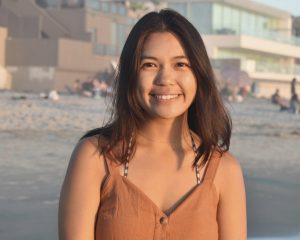
Anesse Pinpokintr grew up in Southern California and spent a large portion of her early childhood traveling back and forth from Thailand, where her parents immigrated from. After graduating from high school, she flew across the country to pursue her bachelor’s degree in environmental science at the University of Rochester, where she’s currently conducting independent research on methane production in oxic lakes.
Driven by an excitement for discovering and passion for combating climate change, Anesse found herself interested in perusing environmental science early on in her career. Growing up by the ocean, she became interested in biological oceanography because it gives her a new way of visualizing where she grew up her whole life. In her free time, she enjoys creating art and sewing.
She became involved in the FjordPhyto project through the Scripps Institution of Oceanography’s Summer Undergraduate Research Fellowship (SURF) Research Experiences for Undergraduates (REU) program and has been mainly working on analyzing and graphing phytoplankton diversity data. She hopes to continue to study phytoplankton ecology and go to Antarctica one day.
Dr. Jack Pan (Oceanographer/Entrepreneur)

Jack Pan is the founder and Chief Executive Officer of Ocean Motion Technologies, Inc.. He is currently a Postdoctoral Fellow at NASA’s Jet Propulsion Laboratory (JPL) and works with the FjordPhyto team using the meltwater data from oxygen isotopes to help build and inform predictive glacial meltwater algorithms from remote sensing products. Jack received his Ph.D. from Scripps Institution of Oceanography (SIO, UCSD) under the supervision of Dr. Maria Vernet. Prior to SIO, he worked as a consultant and team lead at JPL and led the development of satellite remote sensing projects on coastal ocean monitoring. Jack has also participated in several polar research expeditions to Antarctica (FjordEco) and is a recipient of the Antarctica Service Medal for his instrumentation work and sampling in extreme environments. Jack is also an avid traveler and photographer.
Dr. Zoltán Füssy (Biologist, Staff Researcher)

Zoltán Füssy joined the FjordPhyto team in 2023 providing support on the bioinformatics analysis of FjordPhyto genetic data. He is a Staff Researcher and Biologist in Dr. Andrew Allen’s Lab at J. Craig Venter Institute and Scripps Institution of Oceanography, UC San Diego. His primary research area is evolutionary microbiology, with a particular interest in environmental adaptation through biochemistry. His previous works focused on how algae transition to polar environments and non-phototrophy, and how microbes from microaerobic environments deal with oxidative stresses. Zoltán also participated as a phylogeneticist in various projects involving protein translocation machineries. Zoltán received his Ph.D. (2013) and M.S. (2008) in Molecular and Cell Biology from the University of South Bohemia, Czech Republic.
Past Members
Lilianna Watson (Scientific communicator, M.A.S.) 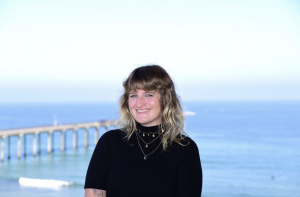
Lilianna is a San Diegan with over 5 years of professional experience in communications. In the interdisciplinary Marine Biodiversity and Conservation program, she is blending her creative and journalistic skills with a marine science education with a goal of making important but complex scientific information more accessible to the public. As part of her Master’s coursework, she has gained skills in multimedia editing, illustration, and data visualization in addition to studying marine biology and oceanography.
Lilianna is passionate about the work that FjordPhyto does and hopes to share the important work that polar guides and operators are doing to advance citizen science in Antarctica. She works with the Vernet lab to create messaging engaging FjordPhyto participants through videos, social media, writing, and managing the website
Gabriela Lamanna (Filmmaker, M.A.S.)
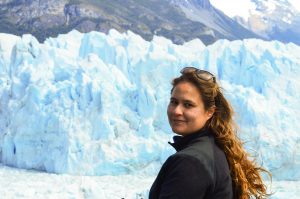
Gabriela Lamanna was raised in El Salvador, where she developed a passion for nature and the ocean that grew with her love for surfing. She graduated from a bilingual school, which gave her the opportunity to become fluent in English and pursue her bachelor’s in Marine Biology at Harriet L. Wilkes Honors College in Jupiter, Florida. She spent a semester at Harbor Branch Oceanographic Institution, where she gained hands-on experience in academic research and data collection, and where she interned at the Dolphin Photo ID Program. For her undergraduate thesis she studied the causes of injury and illness affecting sea turtles in South Florida.
In 2016 she moved to California where she received her Masters in Marine Biodiversity and Conservation at Scripps Institution of Oceanography. She dreams of protecting the ocean through education and science storytelling. As her favorite quote by Sylvia Earle says, “Knowing is key to caring, and with caring there is hope that people will be motivated to take positive actions. They might not care even if they know, but they can’t care if they are unaware”.
You can learn more about Gaby and her motivation to create films for the FjordPhyto project here.
 Dr. Daniela Cajiao (Travel and Tourism Management)
Daniela is a researcher and Ph.D. candidate at Universidad Autónoma de Madrid where she is expanding her investigation on the social dimensions of Antarctic tourism. Daniela obtained her master’s degree in Environmental Management (2010) and a Bachelor in Tourism (2005). Ever since her first Antarctic visit in 2011, Daniela has become passionate about the sustainable future of Antarctica. Her main interests revolve around tourism, adaptive management, and decision-making processes. In 2019, Daniela received an IAATO-COMNAP Fellowship to support her continuing research on Antarctic tourism. Daniela is a member of the IUCN World Commission on Protected Areas, Tourism and Protected Areas Specialist (TAPAS) Group. She is also a member of the Scientific Committee on Antarctic Research (SCAR), Standing Committee on the Humanities and Social Sciences (SC-HASS).
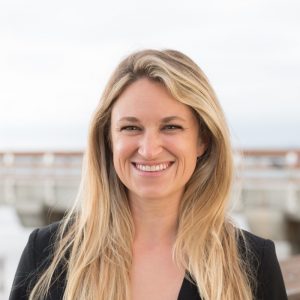
Brooke Dixon (Social Scientist, M.A.S.)
Brooke Dixon graduated from Scripps Institution of Oceanography with a Masters in Marine Biodiversity and Conservation. She worked with FjordPhyto during 2021 to analyze FjordPhyto participant survey data and designed new survey strategies that evaluate the individual benefits of participation in the citizen science program to Antarctic travelers. She received her undergraduate education in Natural Resources from Colorado State University. Prior to entering her graduate program, she spent several years working for Catalina Island Marine Institute as an educator and assistant program director, and served as director of Generation Ocean, a small NGO focused on engaging teenagers in ocean stewardship.
Carmen Zamora (Marine Conservationist, M.A.S.) 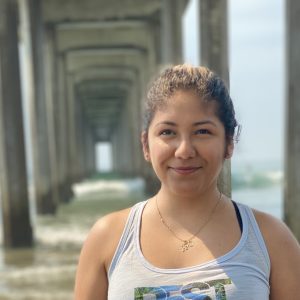
Carmen Zamora is a California native. She loves exploring and learning about the many wonders California has to offer, from hiking through the redwood forests and Eastern Sierra Mountains to finding waterfalls and hidden beaches up and down the California coast! She received her Bachelor of Science degree in Environmental Studies at Sacramento State University, where she grew the passion for marine science. In her undergrad, she worked as a Team Leader teaching students about environmental issues. Here she found her love for educating students in under-resourced schools. After realizing that most of her students had never been to the ocean, she set out to give them that experience. After fundraising with her students, they had enough to travel to a nearby beach to explore the tidepools and ocean for the first time.
Carmen completed her Masters in Marine Biodiversity and Conservation at Scripps Institution of Oceanography in San Diego, CA in 2021. As a science educator and policy expert, Carmen found an interest in helping communities through policy change and education, where she became interested in the FjordPhyto polar citizen science project. She worked with Allison Cusick and Jordan Newman on a FjordPhyto educational curriculum to incorporate Next Generation Science Standards into her lesson plans.
Jordan Newman (Artist) 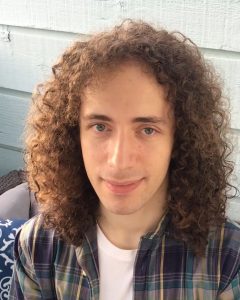
Jordan Newman is a graduate student in the science illustration program at California State University Monterey Bay. He has worked with the FjordPhyto project illustrating Antarctic algae and polar fjord ecosystems. Previously, he worked in a Scripps Institution of Oceanography biology lab, researching marine invertebrate genetics, while also volunteering as an exhibit interpreter at the Birch Aquarium.
Jordan received his B.S. (2018) in General Biology from UC San Diego. Jordan’s illustrations can be found on his Instagram profile @jordan_bioart and on our website here.